The Tarabino Story: From Piedmont to the Purgatoire
Every old house keeps two histories — the one written in brick and timber, and the one carried by the family that built it. The house on the knoll keeps both unusually well. The Tarabino family and the inn belong to the wider history of Trinidad.
Six Brothers from Piedmont
The Tarabino brothers — six in all — came to the United States from the Piedmont region of northwest Italy in the latter half of the 1800s, part of the great wave of Italian emigration that carried whole villages toward the coalfields of the American West. They settled first at the Engleville mining camp south of Trinidad, where the Victor-American and Colorado Fuel companies were driving shafts into some of the richest coking-coal seams in the country.
Mining camps made hard livings and quick lessons. Two of the brothers, John and Barney Tarabino, learned the more durable trade of supplying the miners rather than digging beside them, and in time transferred their business interests into Trinidad proper — a city then approaching its commercial zenith as the seat of Las Animas County and the great coal metropolis of southern Colorado.
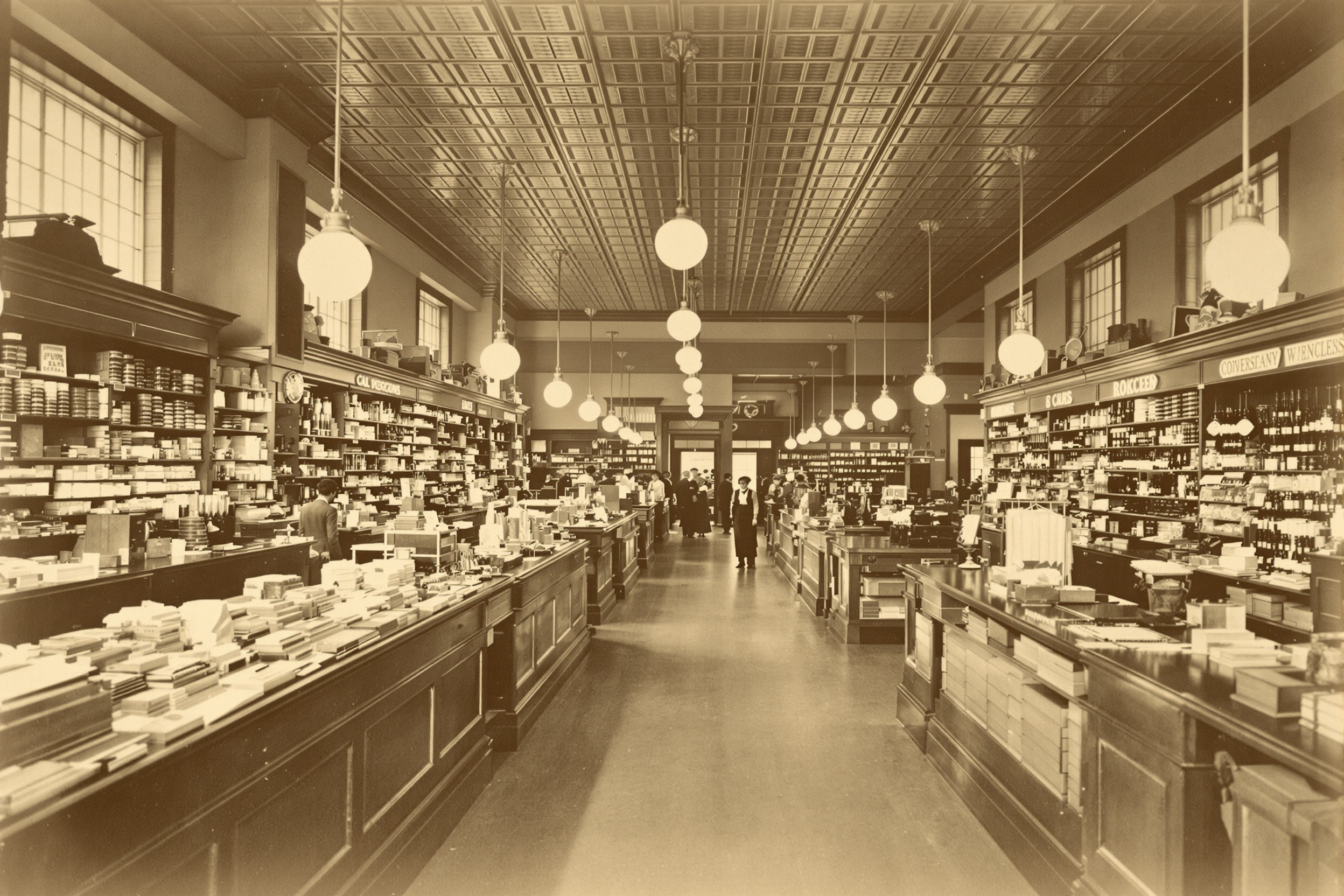
The Famous Department Store
In August 1899, John and Barney established the Famous Department Store on West Main Street. The name was an ambition before it was a fact, but the ambition held: as its popularity grew the store was expanded and remodeled until it ranked among the largest in the city. The brothers commissioned the local architectural firm of I.H. and W.M. Rapp to design the building's structural changes in 1904, and again in 1909.
The Rapp brothers are a story of their own. From their Trinidad office they shaped much of the city's monumental architecture before Isaac Rapp went on to define the Santa Fe revival style in New Mexico. That the Tarabinos retained them twice for a dry-goods store says something about how seriously the family took its place on Main Street. Digitized newspapers of the era — searchable through the Library of Congress's Chronicling America project — carry column after column of Famous Department Store advertisements between the mining news and the railroad timetables.
Those shopfront ambitions belonged to a wider building season. Trinidad added a Carnegie Public Library in 1904, a new city hall in 1909 and a post office in 1910; the Toltec Hotel, Colorado Building and Masonic Temple block also enlarged the commercial streetscape. These dates put the department store's architectural changes beside a town investing in both public institutions and commercial space.
The workforce behind that setting reached well beyond Trinidad. Colorado Encyclopedia records more than 8,000 coal miners in Las Animas and Huerfano counties in the late 1890s, with the number doubling by World War I. European immigrants included Italians, Germans, Scandinavians, Slavs and other southern and eastern European groups; their presence was reflected in churches and newspapers. The coal-country history brings those workers, the downtown building boom and the human cost of mining into the same frame.
Retail was never the whole enterprise. Real estate and ranching interests rounded out the brothers' ventures, and two more brothers, Peter and Luigi, eventually moved to Trinidad and entered businesses of their own.
Building the House, 1907
Because of their close business ties — and as their families grew — John and Barney decided to do an unusual thing: build one substantial home they could share. They chose a prominent knoll on Trinidad's south side, a few blocks uphill from the commercial district. The family presence concentrated nearby: Peter's house went up at Second and Chestnut, just west of John and Barney's site, while Luigi built a bungalow farther up Chestnut.
The large brick house, set on a foundation of manufactured stone, was completed in November 1907. An original carriage house, also of manufactured stone, still stands just below the main house to the east. Other outbuildings recorded on the property — a school house, a smoke house, and the inevitable outhouses — were lost over the following decades.
The Architecture
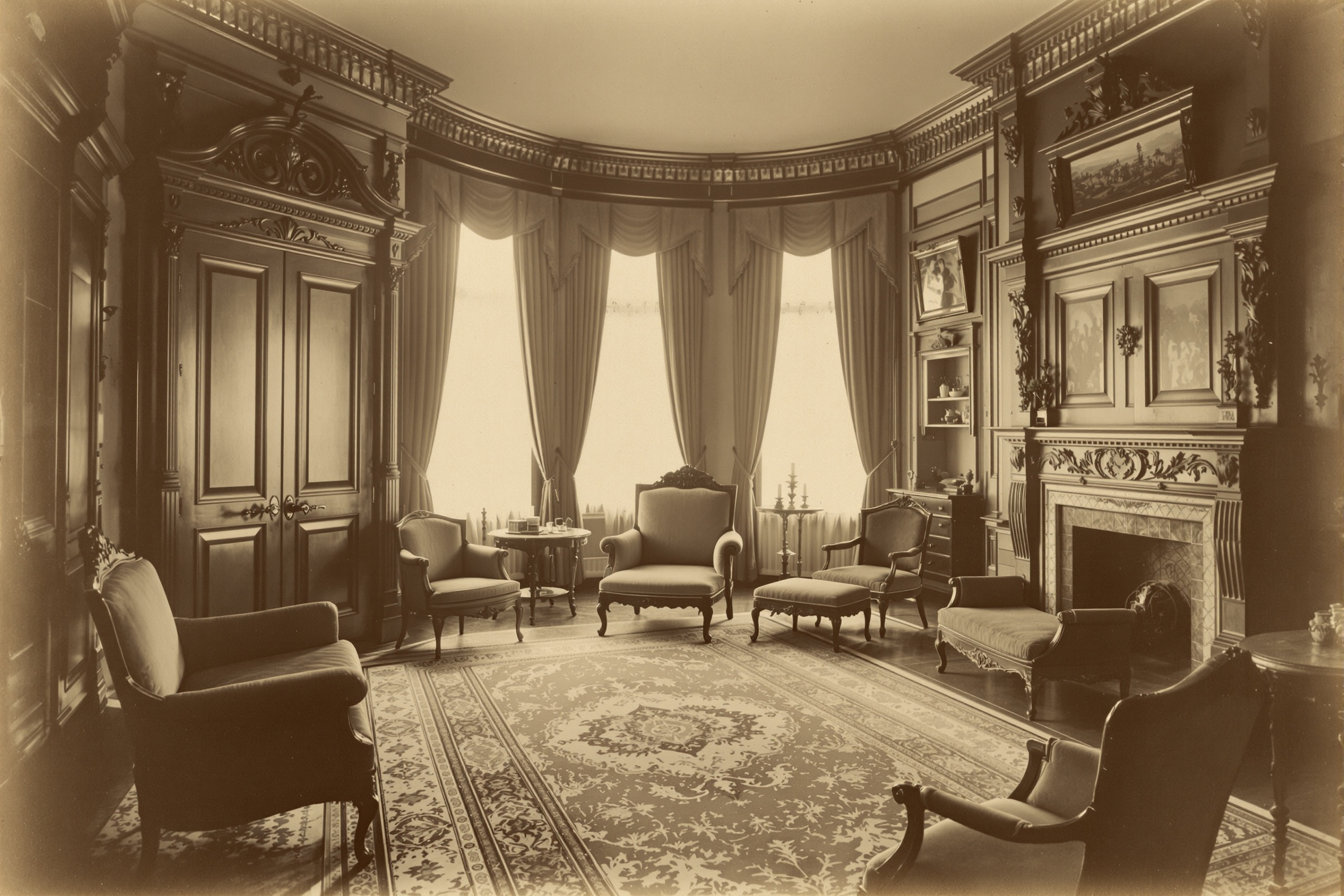
Stylistically, the house resists tidy classification; it has been described as Italianate, as Victorian, and most honestly as both. No drawings survive, but the design is suspected to have come from the Rapp office, and the details argue for a practiced hand:
- A plan based on the shape of the letter U, opening to the street;
- A front veranda supported by smooth columns joined by vase-shaped balustrades, all manufactured of precast concrete — a strikingly modern material choice for 1907;
- Brick quoins articulating every right angle of the building;
- A steeply pitched gable roof with flared eaves gracing each arm of the U, converging into a hip roof with a dormer on each side;
- Two sun porches on the south side, placed to frame Fisher's Peak.
Later Years
After more than thirty years in Trinidad, John and Barney retired to Santa Monica, California, leaving their property interests in the hands of the Tarabino Real Estate Company. John Tarabino died in Santa Monica on September 21, 1918, followed by Barney on September 14, 1921. The house remained in the family until the 1960s, then changed hands several times — yet it endured each transition with its essential character intact, remaining, as the inn's own history page put it, "much as it was nearly 100 years ago."
The Inn Era
Around the turn of the millennium the house opened to travelers as the Tarabino Inn, a five-room bed and breakfast that treated the building itself as the principal amenity. The guest rooms took their names from the house's own materials and geometry — Walnut, Chestnut, the East and West Gables — and the public rooms doubled as a gallery for artists of the Trinidad area. The inn's breakfasts, its small-inn policies, and its tireless promotion of Trinidad's attractions were all hallmarks of its bed-and-breakfast era.
Trinidad itself, meanwhile, kept the larger stage. The city's beginnings on the Mountain Branch of the Santa Fe National Historic Trail, its coal-boom architecture, and its remarkable historic district are interpreted today by the Trinidad History Museum, operated by History Colorado, two blocks from the foot of the knoll. To walk from Main Street up to the house is to walk the whole arc of the Tarabino story — from the counters of the Famous Department Store to the veranda the brothers built to share.