The Tarabino Inn — A Trinidad, Colorado Historic House
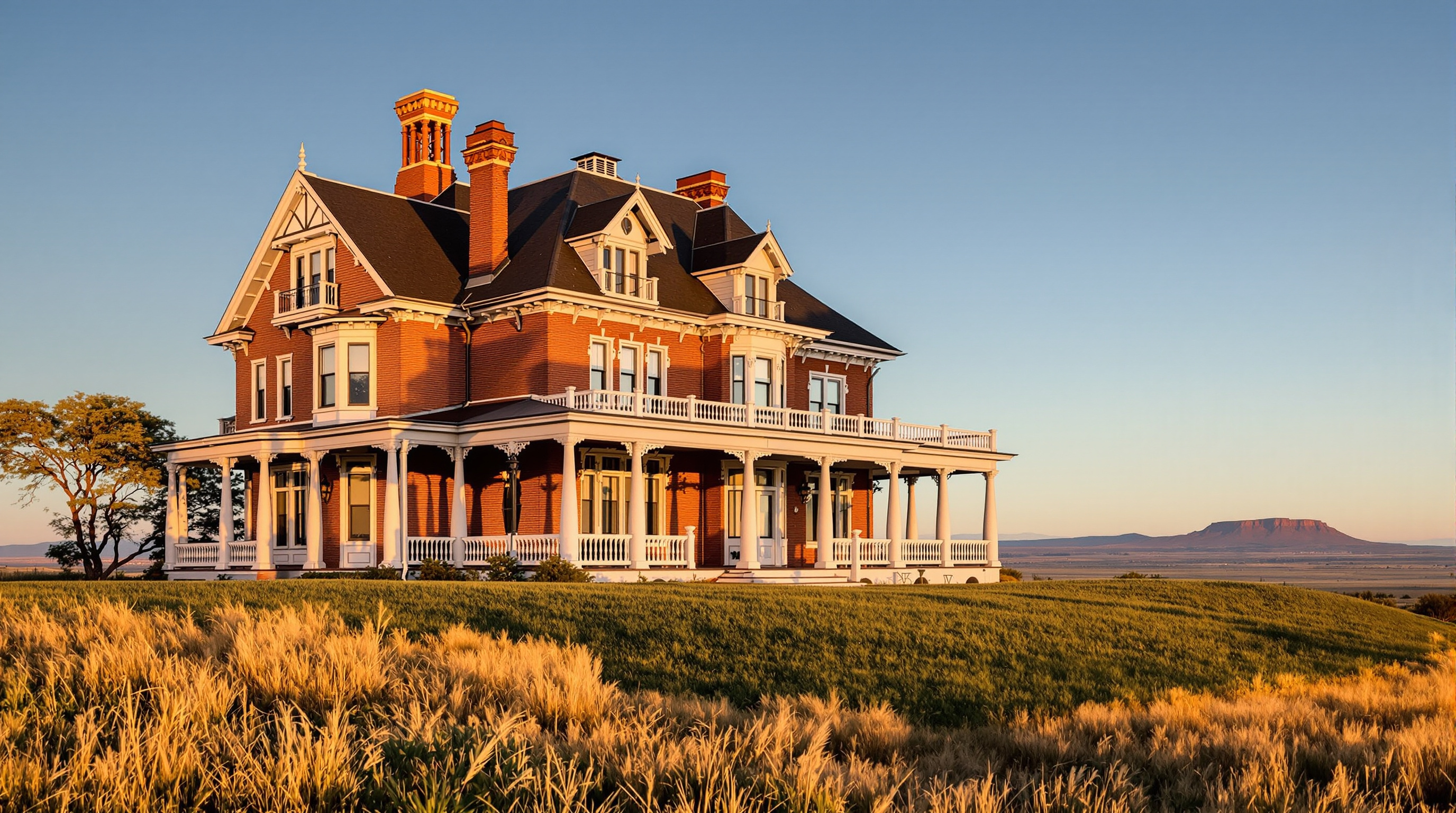
On a prominent knoll on the south side of Trinidad, Colorado, stands a large brick house with a story worth keeping. Completed in November 1907 for two Italian-born merchant brothers, the house has been called Italianate, Victorian, and simply unclassifiable — and for the better part of three decades it welcomed travelers as the Tarabino Inn, one of southern Colorado's most distinctive bed-and-breakfast houses. Its story spans family enterprise, architecture and hospitality.
A House on the Knoll
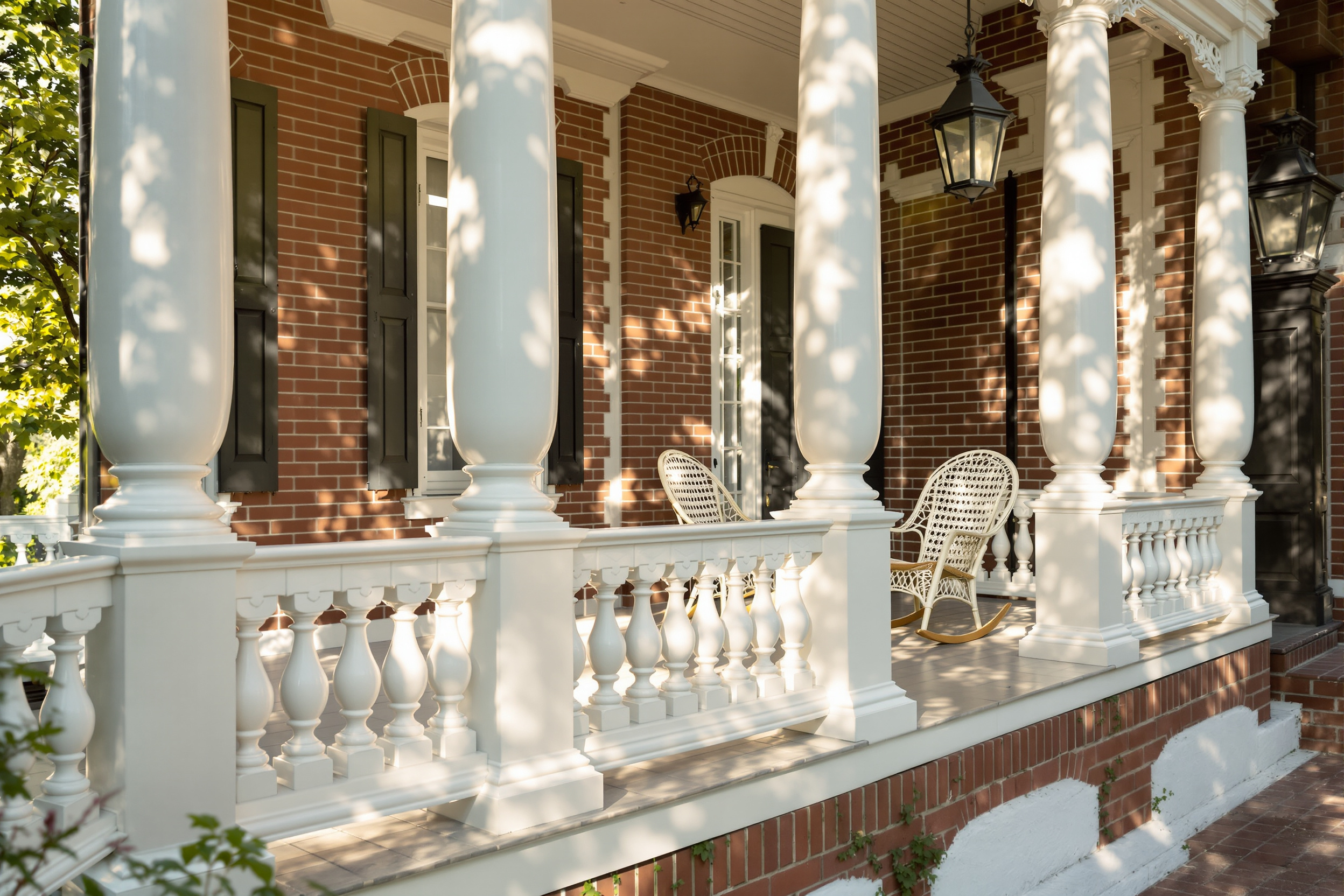
The house was built to be shared. John and Barney Tarabino, whose family story begins in the Piedmont region of northwest Italy, had prospered together in Trinidad commerce — first in the mining camps, then behind the counters of one of the largest department stores in the city. When the time came to build, they chose a rise above downtown with an unobstructed view of Fisher's Peak, the great flat-topped mesa that presides over Trinidad, and raised a U-shaped brick residence with a columned veranda, precast concrete balustrades, steep gable roofs with flared eaves, and two south-facing sun porches aimed squarely at the mountain.
Architectural historians attribute the design — never formally documented — to the office of I.H. and W.M. Rapp, the firm responsible for some of Trinidad's most prominent buildings of the era. More than a century later, the house remains remarkably close to what the brothers built, an anchor of the residential blocks that rise just south of the El Corazon de Trinidad National Historic District.
The Inn Remembered
From the early 2000s until the early 2020s, the house operated as a five-room bed and breakfast that guests described as a museum you could sleep in. Splendid antiques were blended with modern conveniences; rich natural woodwork, persian rugs, and a house-wide fine art gallery gave the inn the texture of the Victorian world it preserved. Mornings meant a full breakfast at eight — Italian strata, blue corn pancakes, migas — served to a small table of travelers who had often detoured off Interstate 25 on a friend's insistence.
The inn offered just five rooms: the grand Walnut Suite and the four-poster Chestnut Suite on the second floor, and the snug East and West Gables tucked beneath the attic roofline. Together, the five rooms reflect the inn's bed-and-breakfast years, alongside the amenities, house policies, and the Trinidad attractions the innkeepers loved to recommend.
Why Trinidad Matters
Trinidad grew up where the Mountain Branch of the Santa Fe Trail crossed the Purgatoire River, and boomed on coal in the decades either side of 1900. Its downtown — among the best-preserved Victorian commercial districts in Colorado — earned National Historic District designation, and organizations such as History Colorado maintain museums within a few blocks' walk of the house. The Tarabino story is a Trinidad story in miniature: immigration, enterprise, architecture, and reinvention, repeated across a town that has never stopped reinventing itself.
The designation followed a deliberate inventory: the Trinidad Historical Society surveyed the city's historic buildings in 1970, and El Corazon de Trinidad entered the National Register of Historic Places in 1972. The town's population had peaked in 1940 at more than 13,000. Designation did not end the pressure on its buildings: Colorado Preservation later named both the district and the Toltec Hotel among its "Endangered Places," while State Historical Fund grants helped save several buildings. Colorado Encyclopedia's district history traces the boom and the continuing work of keeping its architecture standing.
What You'll Find Here
- The History — six brothers from Piedmont, a famous store, and the building of the 1907 house.
- The Guest Rooms — all five rooms, from the Walnut Suite to the West Gable.
- Life at the Inn — breakfast at eight, the art gallery, the library with its fireplace.
- Area Attractions — the museums, festivals, and high country that filled guests' days.
- The Setting — Trinidad's historic heart and the roads that lead to it.
- Resources — curated further reading on Trinidad and Colorado heritage.
About the Tarabino Inn
This website is an independent heritage project. It documents the history of the Tarabino house and the bed-and-breakfast that operated there. It is not affiliated with, endorsed by, or operated on behalf of the current owners or operators of the property, and nothing here can be booked, reserved, or purchased. Rates, policies, and amenities described on these pages are presented strictly as historical record.