The East Gable
Up the second flight of stairs, under the steep eastern roof, the inn kept its most atmospheric room. This site takes no bookings.
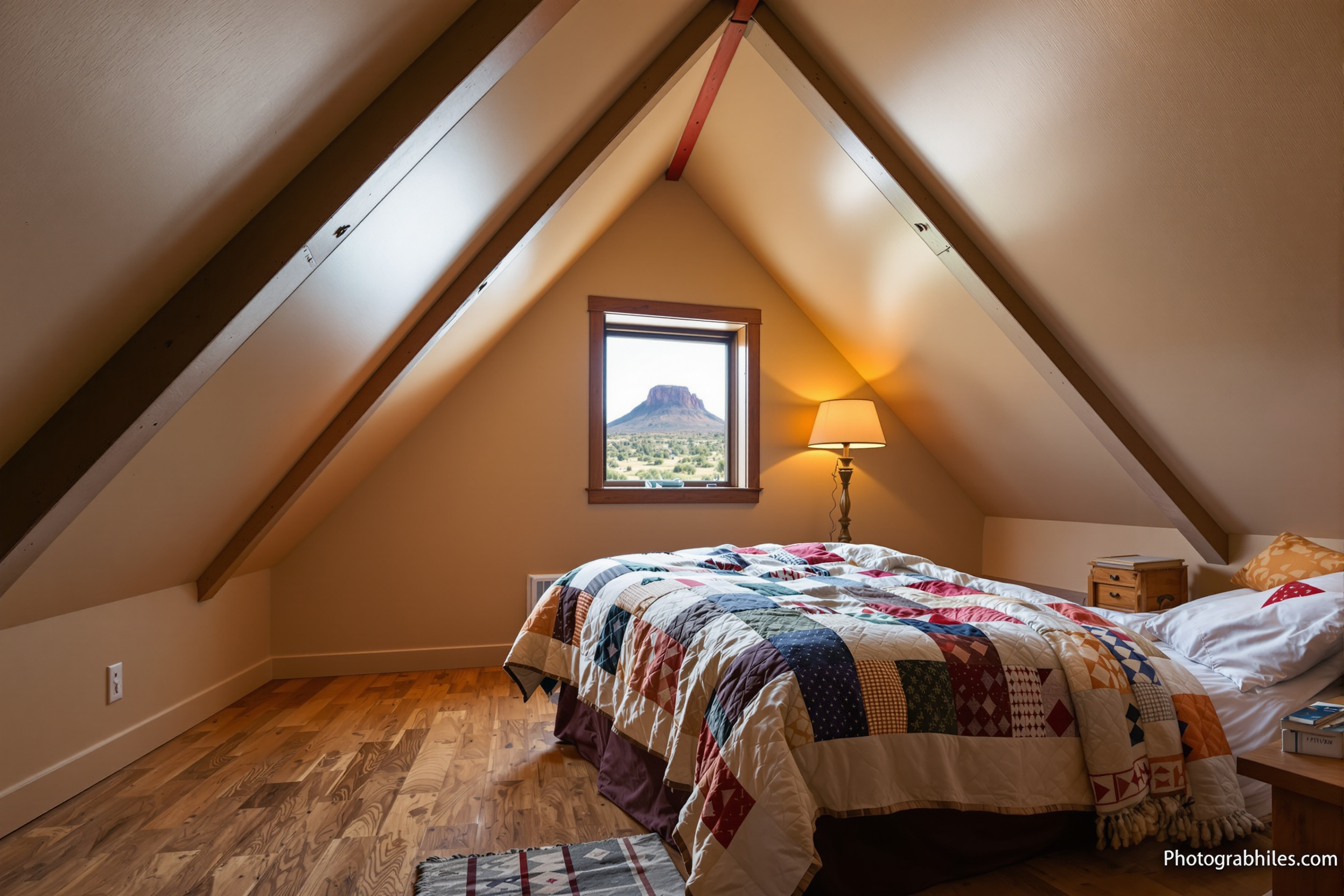
Under the Eaves
The East Gable took its name and its shape from the house itself: one arm of the U-shaped plan rises into a steeply pitched gable with flared eaves, and the room beneath it borrows every angle. Walls become ceiling halfway up; the dormer cuts a bright alcove; and the queen bed sits where the geometry is tallest. The inn listed it plainly — queen bed, private detached bath, double occupancy maximum — and let the architecture do the selling.
A Room with House Rules
The third floor carried its own customs, recorded on the policies page: no infants or toddlers, for safety on the attic stairs and around the low eaves, and never more than two guests to a room. The East Gable's bath was private but down the attic landing — the same century-old geography as the Chestnut Suite's, one floor higher.
The Favorite of Returning Guests
Innkeepers everywhere know the pattern: first-time guests book the grandest room, and returning guests book the strangest one. The East Gable was the strangest one, in the best sense — the room that felt most like being let into the house's secret. Morning light arrived early through the dormer; Trinidad's lights at night sat low and far away; and the rafters creaked in wind off the mesa exactly as a 1907 attic should.
The room also kept the house's best-kept secret about southern Colorado weather: the third floor is where the climate performs. Summer evenings cooled it through the dormer; winter storms announced themselves on the steep roof inches overhead; and on the high plains' frequent clear nights the stars through the dormer glass were the last thing guests reported seeing.
See also the West Gable, the attic architecture of both Gables, and the option to take both rooms together.