The Third Floor: Attic Architecture of the Gables
The last of the room pages steps back from the beds and quilts to look at the attic story itself — the most legible piece of the house's 1907 design. Historical record.
Reading the Roof from Inside
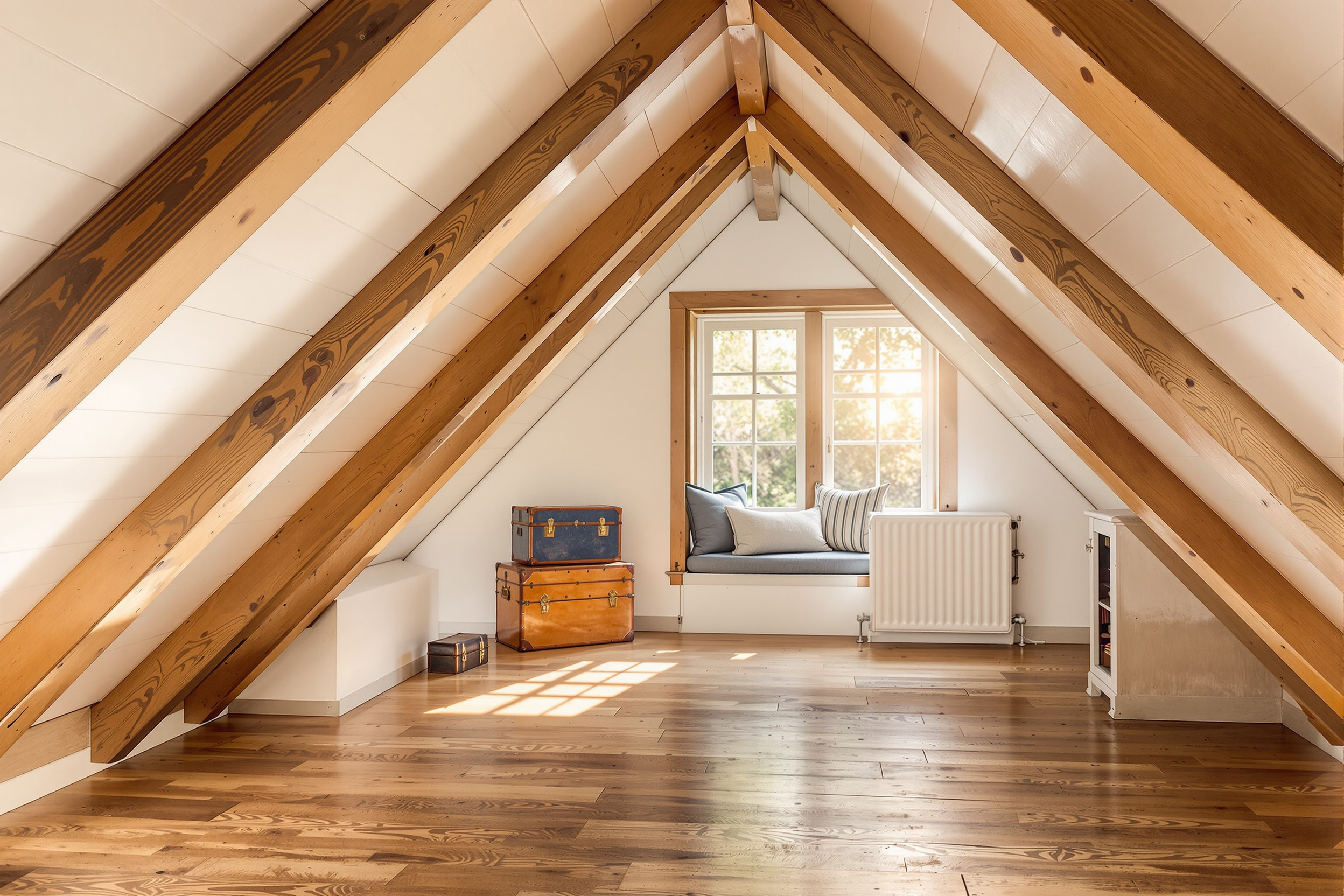
The history page describes the roof as the street sees it: a steeply pitched gable with flared eaves gracing each arm of the U, converging into a hip roof with a dormer on each side. The third floor is where that sentence becomes a place. Each Gable room occupies one arm's gable; the landing between them sits under the central hip; and the dormers — one to a side — throw daylight into what would otherwise be storage dark. Flared eaves, which soften the roofline outside, become deep window reveals inside, ideal for a bench or a stack of books.
From Servants' Story to Best Seats
In 1907, attic rooms of a merchant's house were for staff, trunks, and seasons of things. Their finish was simpler — and that simplicity preserved them, since nobody remodels what nobody shows off. When the house became an inn, the attic story's plainness read as charm, and rooms built for hired help became, by many guests' testimony, the most requested after the Walnut. The reversal is common in historic hotels, and it is always the architecture that does it: low eaves and dormer light produce intimacy that no ground-floor room can counterfeit.
The Practicalities
The inn was candid about the attic's terms: stairs (no elevator was ever cut into the house), two guests per room, no small children, and the West Gable's whole-floor rule. The terms were the preservation working as intended — the same logic as the house policies generally, scaled to the most fragile floor of the building.
Return to the guest rooms or the East Gable.